The four institutes comprising the Department of Physics conduct research in astronomy, experimental solid state physics, nuclear physics and theoretical physics. Detailed informations on current projects of the various groups can be found on the web pages of the institutes.
Matter and Light for Quantum Computing” (ML4Q) is a Cluster of Excellence funded in 2019 within the Excellence Strategy by the German Research Foundation (DFG). It is a cooperation by the universities of Cologne, Aachen, and Bonn, as well as the Forschungszentrum Jülich.
Within QM2, researchers of mathematics, experimental and theoretical physics, anorganic and physical chemistry and crystallography collaborate to unravel the properties of quantum matter.

Observational astrophysics and laboratory astrophysics, instrumentation and modeling are applied to explore conditions and impact of star formation by looking at the physical, chemical and dynamic state of the interstellar medium (ISM). The SFB 956 contributes to fundamental understanding of star-forming processes and establishes an international interdisciplinary scientific network. Furthermore, it promotes young researchers in their scientific career.
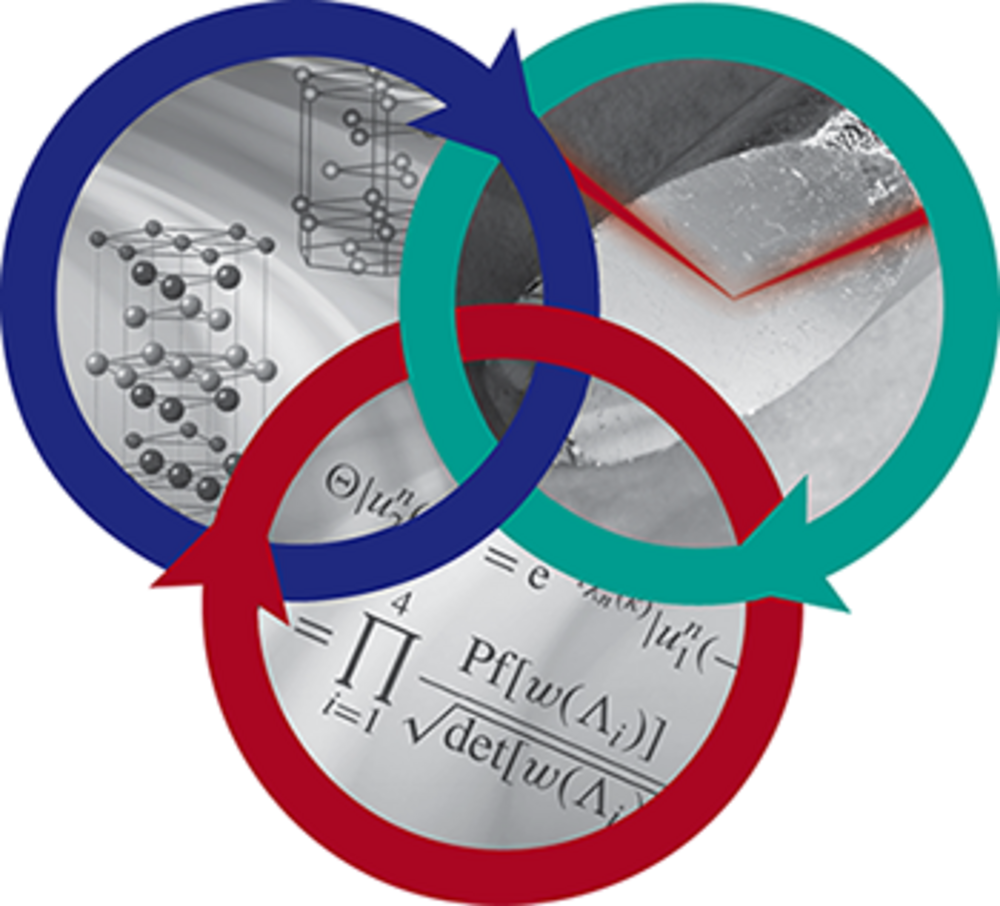
The CRC will consolidate Cologne as a leading international center within quantum condensed-matter physics. Our vision is to discover, understand, and control novel collective phenomena in quantum materials arising from the interplay of spin-orbit coupling, correlations, and topology. The resulting advances in materials science are a strong driver of technological innovations and thereby shape our daily life.
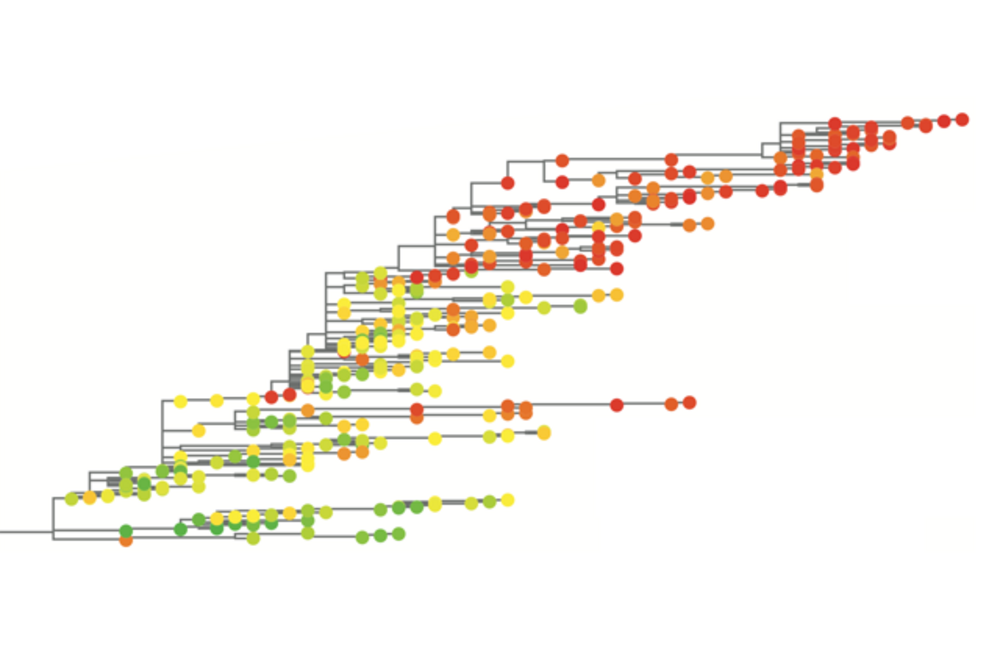
Can we predict pathways and outcomes of future evolutionary processes? We work on this question in fast-evolving systems: microbial populations in the laboratory, viruses and immune repertoires, and cancer cell populations. We build predictive approaches for the evolution of drug resistance and antigenicity in pathogens and of the immune answer in their hosts. This involves key input from biophysics and modern statistical physics. Applications include the design of antibiotics, of vaccines for influenza, and of therapies for HIV and cancer.
Complex quantum systems may realize entangled states, i.e. superpositions of fundamentally distinct physical states at the same time. For example, where the bits of a classical computer can only assume two mutually exclusive values ‘on’ and ‘off’, a quantum bit can be in a simultaneous superposition of an ‘on’ and an ‘off’ state. As a consequence, a multi-bit ‘quantum computer’ would be able to process information in ways far more powerful than what is classically possible today. Quantum superpositions, however, are highly vulnerable to environmental perturbations such as radiation, noise, or other sources of quantum wave decoherence — the main reason why such type of quantum information processing has not become a reality yet.
The mission of CRC 183 is to overcome these challenges within the context of condensed matter physics. A salient feature of entangled quantum matter is that the large number of atomistic constituents forming a solid may mutually protect each other against the detrimental effects of decoherence. Within CRC 183 we do research on these protective mechanisms, their implications in quantum information theory, and the ensuing perspectives in the design and realization of quantum devices. The long term agenda of the project is to work towards the realization of solid state quantum information devices.